


All About Porthcurno
Explore more things to see, do and discover
Page Anchor
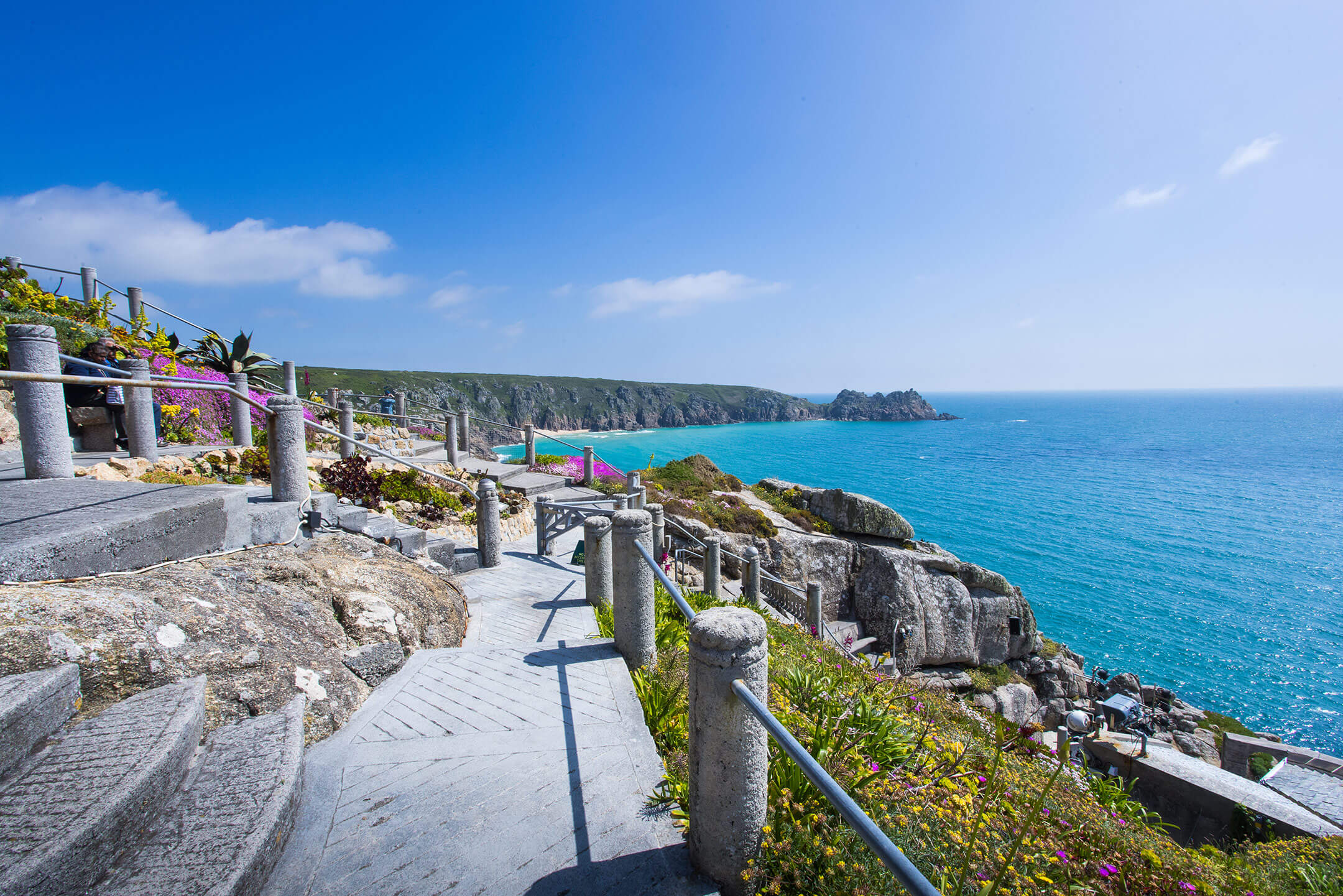
Porthcurno is a place of natural beauty and great historical importance. From its world-famous beach and coastal paths to its role at the heart of global communications, this small valley has an exceptional story to tell.
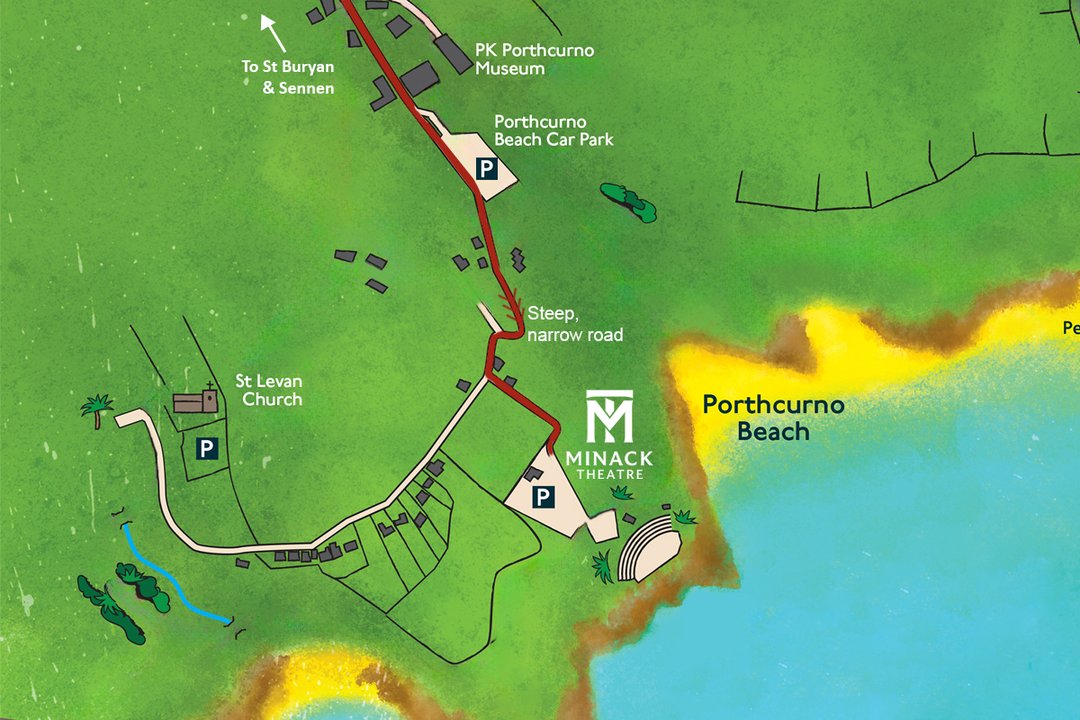
The Minack Theatre sits on the headland above the long Porthcurno Valley which leads to Porthcurno Bay. Like many Cornish coves, access is by a single track road winding down to the sea.
A world centre of communications
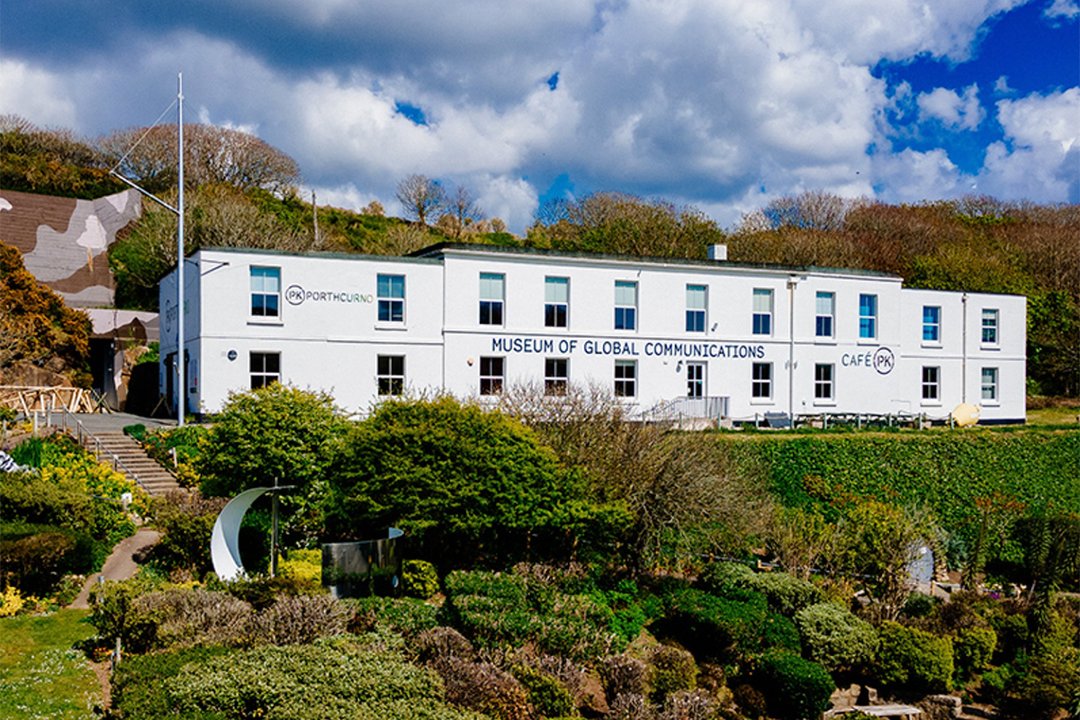
As you drive, cycle or walk down the road, take a look at the buildings you pass. If some of them look a bit like residential blocks, that’s exactly what they were. In the 19th century, this remote valley was at the forefront of communications technology when the first international telegraph cable was brought ashore here, connecting Britain to India and later the whole of the British Empire.
Porthcurno, (PK, to use its codename) became the most important telegraph station in the world in the late Victorian era. At one time, the whole valley was owned and operated by the Eastern Telegraph Company, and today you can stay in holiday lets with names such as Zodiac House, which once housed their engineers and students.
The telegraph station is now a museum of global communications, PK Porthcurno, where you can learn about its amazing history and visit the secret underground bunker dug into the hillside during World War 2, from which vital messages were sent to the Allied forces overseas.
Golden sand and crystal sea
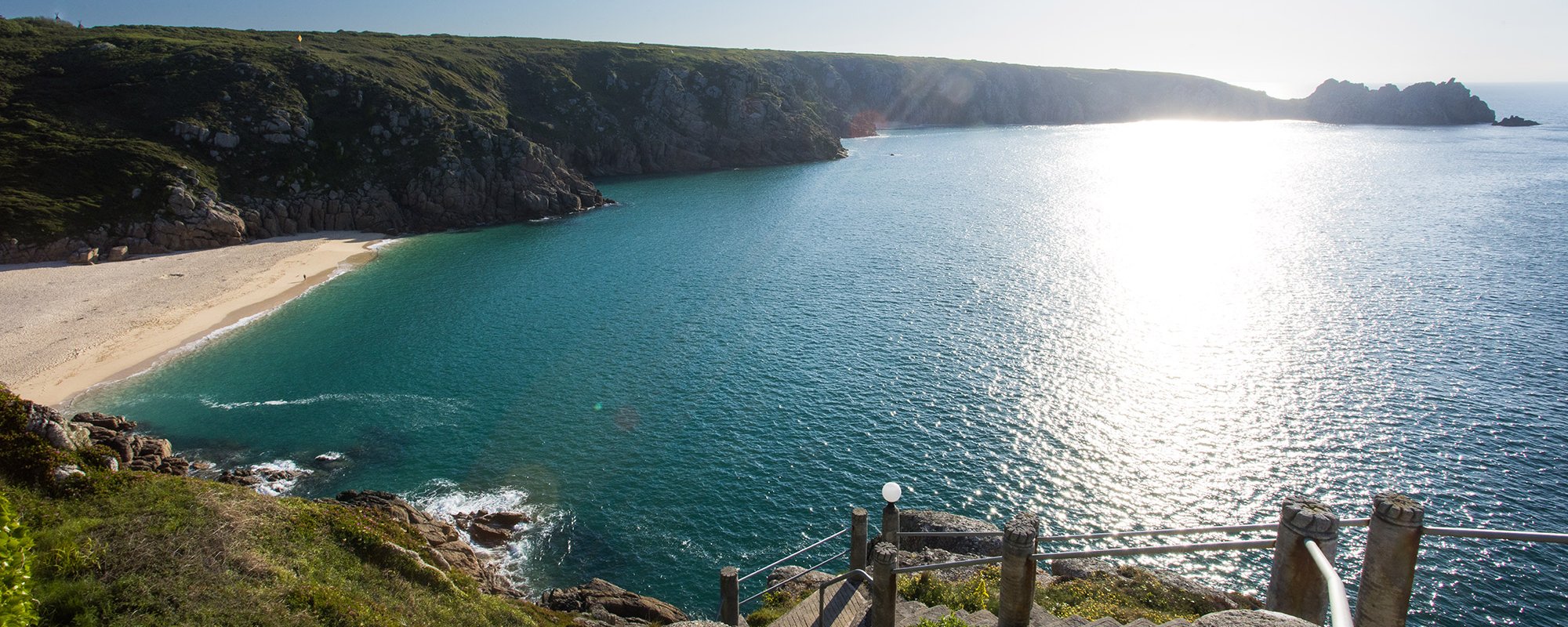
Porthcurno Beach is famous for its soft golden sand and stunning turquoise water (at least when the sun is shining). But don’t be fooled by its tropical appearance, this is Cornwall and the sea can be quite chilly. Even so, Porthcurno is a great place swimming or sunbathing, with easy access from the car park. In the summer months it is patrolled by lifeguards, and dogs are not allowed on the sand in peak season.
As you relax on the beach, just think, beneath the sand still run the huge rusting cables that once kept the nation safe in war.
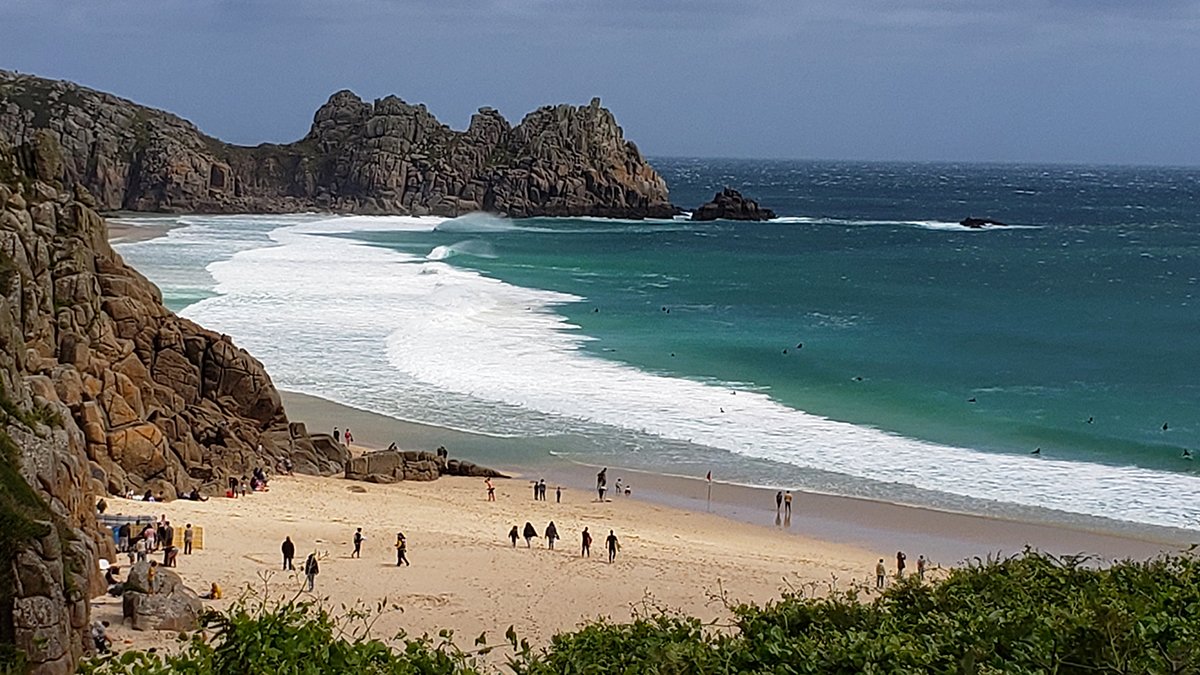
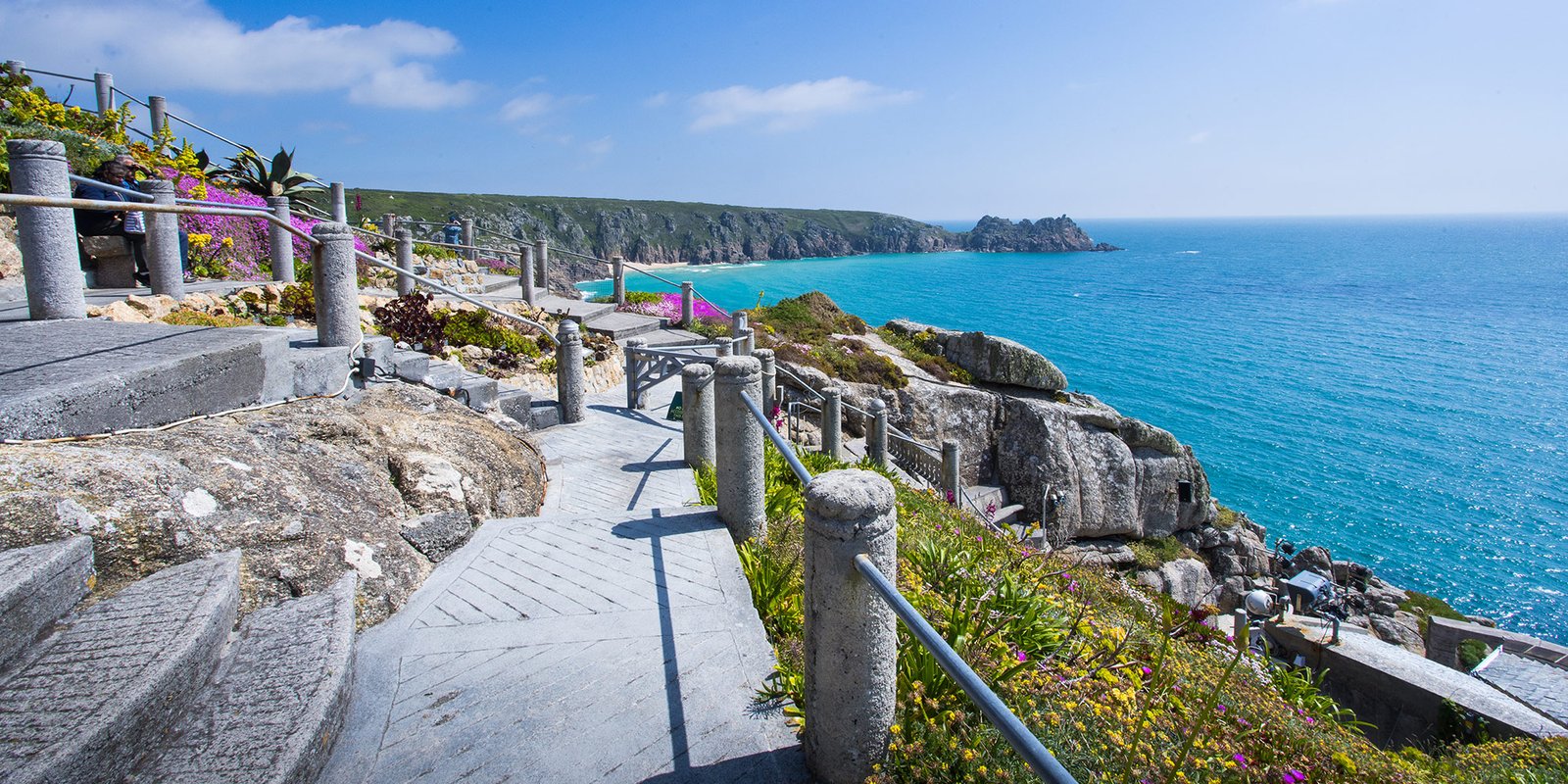
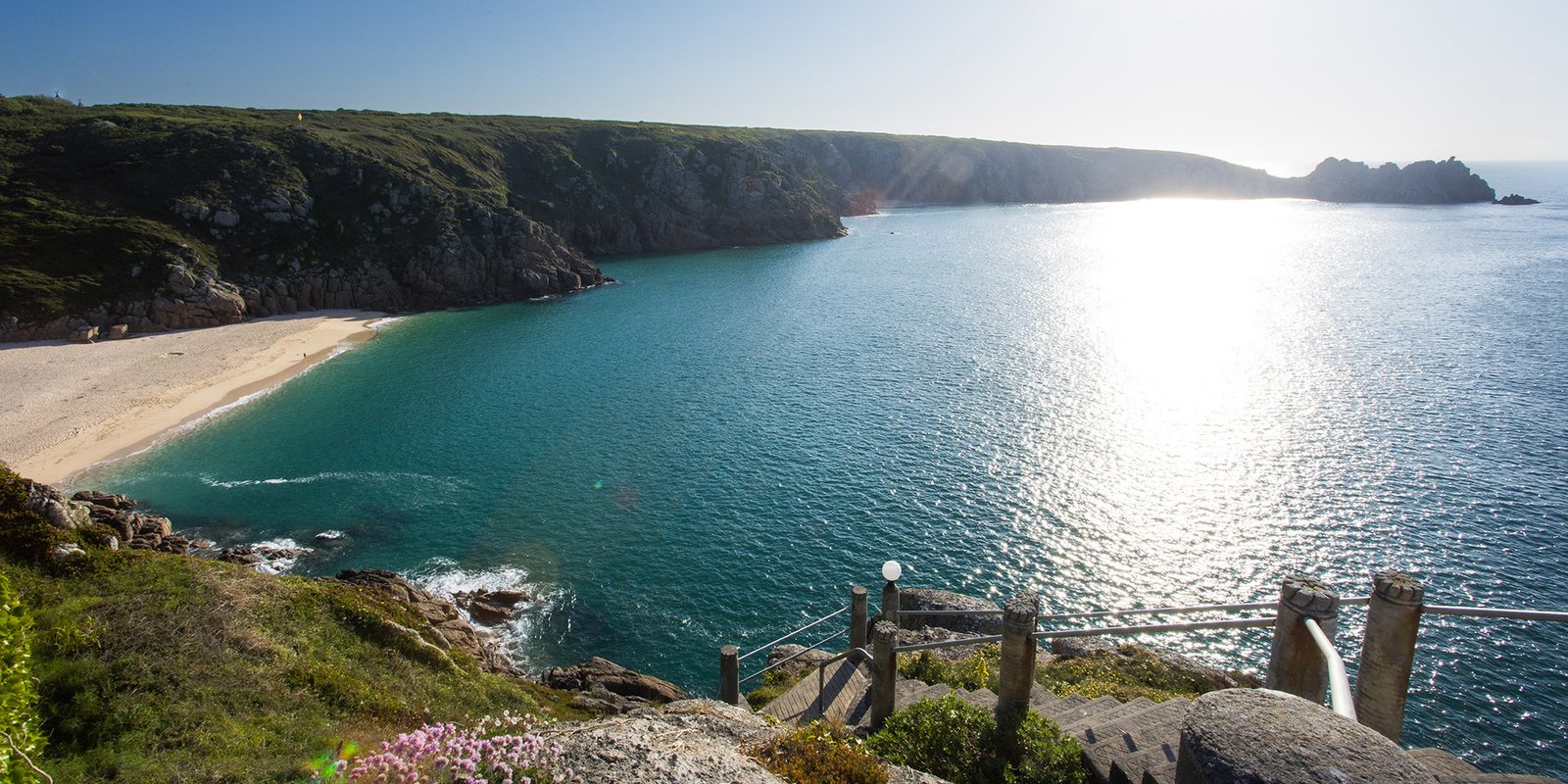
From the beach or cliffs, you may spot a small sandy cove to the left of the bay. This is Pedn Vounder. Access to this beach has been closed due to dangerous rockfalls.
Stop for a snack
There’s a small café just across the road, and toilets are also available and signposted from the car park. Sadly, Porthcurno’s Cable Station pub closed a few years back, so the nearest hostelries are the Logan Rock Inn at Treen, the Land’s End Hotel or a choice of pubs and cafés in Sennen. Inland, there’s also a pub and a farm shop in St Buryan.
Walk the cliffs
The Cornish coast path can be accessed on both sides of Porthcurno Beach. To the East the path leads around the bay to Treryn Dinas (Treen Castle), an iron age fortress, and the Logan Rock, a 65 ton, naturally balanced rock suspended 30 metres above the sea.
A concrete beach hut
On the West side of the bay, look for steps cut into the rock and follow the path up the cliff face towards the Minack Theatre. This path is rugged and very steep in places, and is strenuous climb, but if you take the challenge, you will be walking in the footsteps of Rowena Cade, who built this route as her access to the beach. When you get tired, think of her, toiling up the path carrying a sack of sand to mix into concrete for the theatre.
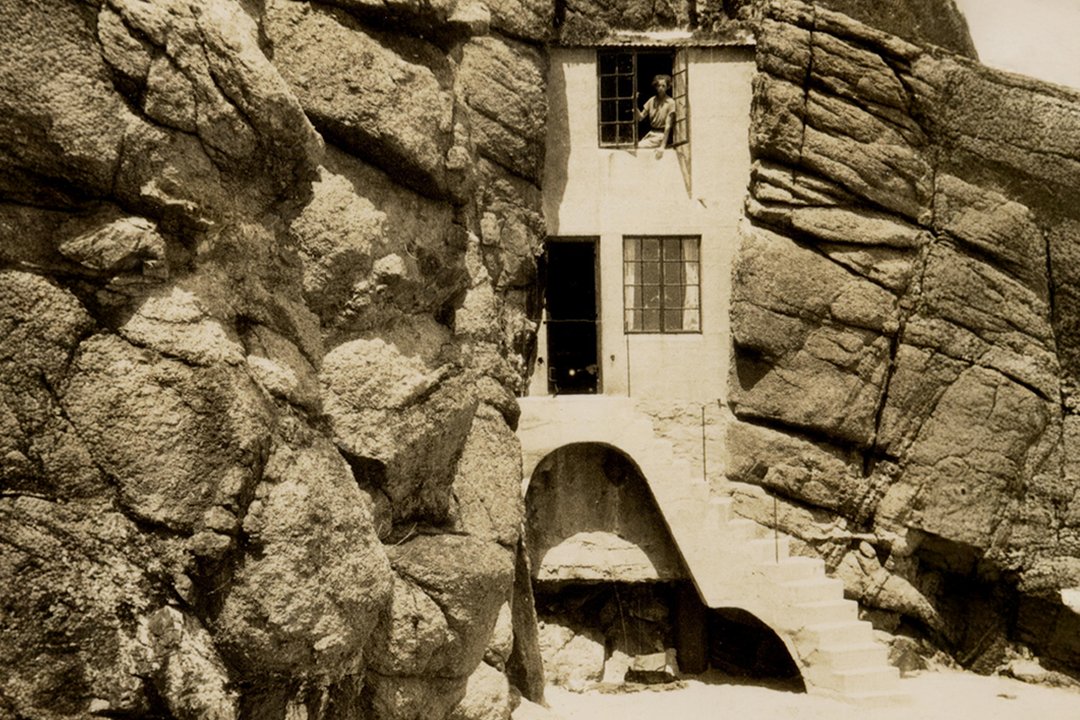
Near the start of the path, look for a drab, concrete wall with boarded up windows and a flight of steps leading up to it. This is all that is left of the ‘Wendy house’ Rowena Cade built as a beach hut for her family.
Rowena Cade’s path ends at the Minack Theatre car park, but if you want a longer walk, there are some lovely local routes included in our Porthcurno Guide which you can download below or pick up free at the theatre.
St Levan Church
For a gentle stroll, continue along the road beyond the Minack Theatre for about a quarter of a mile, to St Levan Church, an ancient building parts of which date from the 13th century. Rowena Cade is buried here, but don’t look for her headstone as she specifically requested that her grave be unmarked. Her real memorial is the theatre that she built.
The road ends at the church, but a footpath will take you down a gentle valley to tiny Porthchapel beach and back along the clifftop to the theatre.
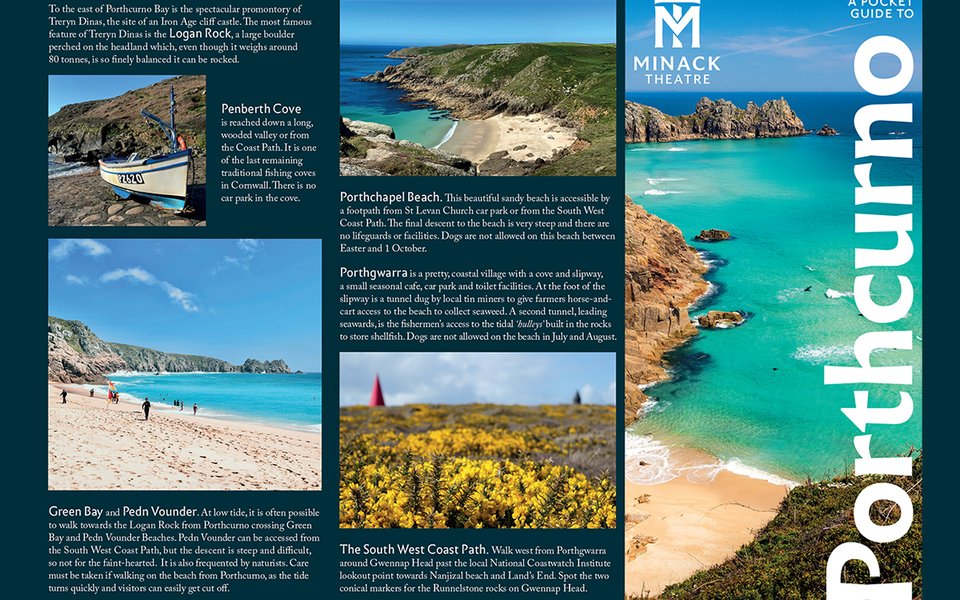
Discover more local places to visit in our Porthcurno Guide.
Local car parks
Parking at the Minack Theatre is only for the duration of your visit. If you are spending time exploring Porthcurno, you will need to use one of the other available options. The main car park is the beach car park at the bottom of the hill to the theatre. It can be very busy during the summer. If you are visiting PK Porthcurno, the museum parking is adjacent to the beach car park. There is also a grass car park next to St Levan Church.